
Subcategories
A Article Count: 4
B Article Count: 13
C Article Count: 15
D Article Count: 4
E Article Count: 3
F Article Count: 6
G Article Count: 6
H Article Count: 4
I Article Count: 1
J Article Count: 5
K Article Count: 3
L Article Count: 5
M Article Count: 12
N Article Count: 3
O Article Count: 2
P Article Count: 7
R Article Count: 2
S Article Count: 16
T Article Count: 6
W Article Count: 14
Lord Chitnis of Ryedale
The Independent obituary
Pratap Chitnis, who has died aged 77 of cancer after a short illness, was a Liberal strategist, a radical member of the House of Lords and a highly effective chief executive of a Quaker trust. He had more influence on British politics than was apparent at the time. He was always more interested in putting ideas into practice than in spending time formulating them - though it should not be thought, as has been suggested, that he was uninterested in policy and values. In fact he was deeply concerned about social values at home and about repression abroad. Every speech of his in the House of Lords and the whole thrust of the Joseph Rowntree Reform Trust's work during his twenty years as Chief Executive, was designed to diminish inequality, to protect vulnerable individuals and to ensure that the politically dispossessed achieved political influence.
Pratap Chitnis was a very conservative Roman Catholic. Born in London, of Anglo-Indian parentage, he was, at the outbreak of war in 1939, at the age of three, sent away from London into the care of nuns. From there he went to Stonyhurst, the Jesuit college. His education had a deep effect on Chitnis. and he became a deeply religious man.
He supported the Latin mass believing that it ensured that a believer anywhere in the world would be "at home." with the service. He saw no intellectual problem in being by faith a conservative catholic and by politics a radical social Liberal.
He joined the Liberal party through attending a Liberal rally at the Royal Albert Hall. Even in the dark days the party could fill huge halls. Chitnis was impressed by Jo Grimond's speech but he was so amazed that a party he thought dead and buried could pack the Albert Hall, that he joined it.
Chitnis was immediately enlisted as a candidate in the 1959 municipal elections. With five candidates from each party, Chitnis finished fifteenth and last, with precisely 98 votes. It was his first and last candidature! Four months later he was the general election agent for the Liberal candidate, Michael Hydleman, in the South Kensington constituency in which Sir Oswald Mosley stood as a fascist candidate. Hydleman was Jewish and Chitnis visibly of an Indian background. They tackled the Mosley presence head on and were duly met with an unpleasant and sometimes violent response.
Early in 1960 Pratap Chitnis was appointed as the party's first local government officer. He set about tracking down every Liberal municipal representative so that they could be mailed regularly and visited occasionally. This was less simple than it sounds. Sometimes a Liberal councillor could only be identified by contacting the local press using the devious pseudonym of the "Municipal Research Association".
The work of the department rapidly expanded and in February 1962 I joined Chitnis as his assistant. He had already been appointed as the Liberal agent for the promising by-election in Orpington. He took me to three meetings in the London to show me "what we do" and announced that he was forthwith departing to Orpington.
His role at the by-election was crucial. He designed and implemented an organisational master plan, with the basic day-to-day organisation delegated to three full-time sub-agents and took key strategic decisions, such as keeping the inexperienced candidate, Eric Lubbock, off media events with the highly articulate Conservative candidate, Peter Goldman. In addition he was decisive in grasping opportunities. The Daily Mail gave him information on the eve of poll that its opinion poll would show the Liberals narrowly ahead; he bought nine thousand copies and had them distributed to the commuters at all the railway stations in the constituency. Chitnis once told me that he had overspent the legal limit at least threefold!
To capitalise on the result the party immediately appointed Chitnis as the party's training officer and, two years later, as its press officer. Finally, in 1966, he became the party's Chief Executive.
The election of Jeremy Thorpe as party leader marked the beginning of the end of Chitnis' involvement at the heart of the organisation. He was involved in a vain attempt to stop him becoming leader, believing that Thorpe had little intellectual depth and a tendency to interfere in party affairs without authority. Pratap Chitnis' position as the head of the party's organisation became increasingly uncomfortable. In addition the party failed to follow his advice that cuts in the party's organisation were required in order to deal with the financial deficit, and, in October 1969, he resigned.
Chitnis was immediately snapped up by the Joseph Rowntree Social Service Trust (now the Joseph Rowntree Reform Trust) in York as its first professional head. It was an ideal appointment which enabled him to influence public policy without having to go through interminable party debates.
e has been described as "self-effacing" but this was not the case. A very private person, yes, but he was always happy to be known as the author of a particular policy or tactic. His marriage in 1964 to Anne Brand, an employee at Liberal headquarters, came rather out of the blue but it delighted their colleagues and friends. Their son, Simon, was born in 1966. He was a bright, intelligent boy and it was a huge blow when he developed a brain tumour. Eventually he died in 1974.
Chitnis built on the Trust's record by making it much more proactive and often controversial. It put its efforts into peacemaking in Northern Ireland and it established relations with liberation movements in southern Africa to assist them to provide administration and services in the areas that they had liberated. This latter work was the cause of a bomb arriving by post at the Trust's York office. Fortunately it didn't go off. He was also instrumental in the introduction of the so-called "chocolate soldiers" whereby bright young assistants were attached to parliamentarians. The scheme was later taken over by the government. Being conscious that many radical groups needed but couldn't afford a London base, he got the Trust to buy a large building in Poland Street in Soho so as to provide space to a host of worthy groups.
Also at this time Chitnis became a member of the Community Relations Commission and of the BBC Asian Programme Advice Committee. These appointments enabled him to claim when made a Life Peer in 1977 that it was for his services to race relations and to sit on the cross benches, even though the peerage was part of the Liberal party allocation.
In the Lords he became a defender of human rights, liberal immigration policies and, above all, an outspoken opponent of authoritarian regimes that manipulated elections. He went on election monitoring missions to El Salvador, Nicaragua, and Guatemala, and attempted to go to Guyana in 1986, only to be refused a visa by the regime. He also went to monitor the Rhodesian election of 1979. All the other monitoring bodies gave the election a favourable judgement but Chitnis condemned it, calling it "a gigantic confidence trick."
He had let his Liberal Party membership lapse in 1969 but when Jeremy Thorpe was finally forced to resign he was instrumental in persuading Jo Grimond briefly to become leader again until a successor could be elected. Then when David Steel was elected leader, Chitnis became one of his advisers, particularly assisting with his election tours. He also advised Steel during the Lib-Lab Pact of 1977-78 and during the negotiations that led to the Liberal- SDP Alliance in 1981.
He retired from the Joseph Rowntree Reform Trust in 1988 and moved to Provence with Anne, growing olives and attending daily mass. He took formal "leave of absence" from the Lords and disappointed his many friends and colleagues by virtually cutting himself off from political and social affairs and was sadly missed over the past twenty-five years.
Pratap Chidamber Chitnis, Lord Chitnis, born 1 May 1936; died 12 July 2013. He is survived by his wife Anne.
See also The Independent.
Donald Chesworth OBE
 Donald Chesworth was an exceptionally able politician with the unusual characteristic of disliking intensely any sort of self promotion, only consenting to being in the spotlight when persuaded that it was unavoidable if one of his many campaigns was to be advanced. He understood the political processes superbly, and used them most effectively, but the significance of his role in postwar politics was only known to a relatively small number of colleagues.
A life long Labour Party member he served short periods on the London County Council, the Greater London Council and the Kensington and Chelsea Borough Council, but never saw his own political affiliation as a barrier in itself to personal friendship with those of other persuasions. In any case, in latter years he treated his party rather better than his local party treated him.
His skills in bringing together and servicing the right people to achieve a change in policy, coupled with his tenacity and judgement, served innumerable good causes well over the past forty years. In Britain, for instance, it was Donald Chesworth who played the key role in rebuilding the local community after the Notting Hill race riots in the '50s and who engineered the downfall of Peter Rachman in the early '60s. Rachman certainly knew nothing about the character of his adversary - Donald recounted with glee the occasion when Rachman telephoned him at County Hall in an attempt to "come to some arrangement"!
Donald Chesworth believed passionately that education was fundamental to the life chances of every individual, young and old, and numerous initiatives and innovations both in London and abroad came from his fertile mind and his skill at extracting resources both from the public authorities and from charitable foundations. In recent years he was instrumental in early projects that linked vocational training with access into further education.
He did not really have time to earn a living and, in a sense, whenever survival forced him to do so, it tended not to fit comfortably with others' ideas of management and administration. Even so, his long period as Warden of Toynbee Hall was a productive time and gave him a base from which to continue his real skill of putting together the pieces of the political jigsaw in order to bring another project into being or to resolve another injustice.
His apparently considerable patience was by no means entirely natural and it stemmed from a reluctant but shrewd acceptance of human nature even though in his heart he never understood why his own commonsense and deep sensitivity were not shared. To Donald they were not special attributes but simply the individual's natural contribution to civilisation and humanity. It was this attribute which ensured that involvement in a project or campaign never excluded personal contact with friends.
Donald Chesworth was an avowed world federalist and had a concern for humanity wherever there was a need and he had particularly close connections with Tanzania, Mauritius, and Bangladesh. This last concern fitted well with his work and residence in Spitalfields where his knowledge of Bangladesh and his links with the country invested his work in fighting for the rights of Bangladeshis in Britain with both warmth and authority.
He was a fascinating mixture of the ascetic and the lover of certain comforts, such as those afforded by the Reform Club, plus an appreciation of art and of literature. His latter years were weighed down with a debilitating heart condition. Despite this he continued to work towards the re-opening of the Thames beach near Tower Bridge once dedicated to London children. It was also entirely typical that he should die whilst en route to a meeting arranged by him with the aim of securing protection for the Kurds under the Geneva Conventions.
Donald Piers Chesworth, born 30 January 1923, OBE 1987, died 24 May 1991
Hon Alderman Vyvyan Cardno
Vyvyan Cardno, an honorary alderman of Leeds, who has died at the age of 96, was a very different kind of Conservative than her very cut glass accent would suggest. Throughout her long career as a Conservative member of Leeds City Council she was friendly with members of all political parties. Essentially a very practical person she was more interested in achieving improvements in services than in scoring political points.
By profession Vyvyan Cardno was a nurse, and had been a nursing sister in Queen Alexandra's Imperial Nursing Service, volunteering for service with the Number 6 Ambulance Train in France at the beginning of the Second World War, and returning with the British Expeditionary Force on the fall of France in 1940. Later in the war she saw service in Egypt, Palestine, Italy and France again.
She was first elected as Councillor for the Meanwood ward in May 1951, holding her seat until being elected Alderman in 1967. In 1974 she retired from the Council and was appointed as one of the first Honorary Aldermen. When the Conservatives gained control of Leeds City Council in 1967, Alderman Cardno became Chairman of the Health and Welfare Committee and, subsequently, Chairman of the Health Committee in 1971. Ahead of her time, she called for mentally handicapped men and women to be supported within the community rather than being kept in hospital. In April 1971 she was appointed to the Central Health Service Council by the Minister of State, Lord Aberdare. In 1958 she had been appointed a member of the BBC North Regional Advisory Council.
Alderman Cardno's other great interest was music and she was one of the founder governors of the Leeds College of Music on its establishment as a Further Education College in 1965. She and her husband Jimmy were both pianists. Typically, when in later years the college lacked funding for particular events, she became active in the formation of the Friends of the Leeds College of Music and organised a number of fundraising events. It was exceptionally difficult to refuse an invitation from Vyvyan Cardno.
A person of very eclectic tastes, she confessed to being a Leeds United supporter, designing and making her own clothes, enjoying cooking and keeping bees.
Vyvyan Cardno, born 1908, married to James, died 18 August 2005.
Baron John (Jack) Diamond of the City of Gloucester
 Jack Diamond, former Labour Minister and SDP trustee, came from that same Leeds Jewish background that also produced Gerald Kaufman and Irwin Bellow in national politics and K C Cohen and Josh Walsh as formidable municipal pioneers. His father, the Reverend Solomon Diamond was a chazzan, or cantor, at the Belgrave Street synagogue from 1897 until his death in 1939. As a child Jack Diamond attended services conducted by Moses Abraham, one of Leeds' most renowned rabbis. He went to Leeds Grammar School and then, in 1931, qualified in London as an accountant. His brother, Arthur Sigismund Diamond, was a distinguished lawyer who became Master of the Rolls.
Diamond's first elected office was as a member of the London County Council and then, in 1945, he gained Manchester Blackley for Labour, holding the seat in 1950 but losing it in 1951. Unusually for a first term MP he became a member of the Speaker's panel, his solid workmanlike skills even then being recognised. After his defeat in 1951 he combined his accountancy training with a typically Jewish fondness for the movies by becoming the Managing Director of Capital and Provincial which ran a chain of news theatres across the UK. He returned to the House of Commons in 1957 through a by-election in Gloucester, a seat he held until 1970. In his post-election dissolution honours of that year Harold Wilson made Diamond a Life Peer.
Jack Diamond was a solid, intelligent and highly conscientious politician. These traits, coupled with his accountancy background made him an ideal Chief Secretary to the Treasury. This post, effectively number two at the Treasury and requiring an immense grasp of detailed financial figures, he occupied for six years, 1964-1970, for the last two of which Harold Wilson brought him into his Cabinet. He was very much a pro-European and was dismayed when Hugh Gaitskell proved to be less than luke warm over entering the EEC. Even so Diamond had a great affection for Gaitskell and was for some time the main funder of the Campaign for Democratic Socialism which brought together those on the moderate wing of the Labour party.
In the House of Lords Diamond continued to take on financial challenges that required his brand of assiduity, notably by chairing the Royal Commission on the Distribution of Income and Wealth in 1974. Perhaps typically, the thoroughness which stood him in good stead at the Treasury and with the Royal Commission was dismissed as being "pedestrian" by Barbara Castle, and as coming from "an accountant's mind" by Dick Crossman. Perversely, in his diaries, Tony Benn usually write more approvingly of him.
With Diamond's involvement as Treasurer of the Fabian Society and in CDS, it was no surprise that he was closely involved with the Gang of Four - Jenkins, Owen, Williams and Rodgers - in the formation of the Social Democratic Party. He was a signatory of the initial Guardian advertisement in February 1981, one of the five trustees of the party, its leader in the House of Lords, and he ably anchored the 1983 election campaign in London whilst the leaders traipsed round the country. His was a presence of great calm and sound judgement when, as was very often the case, relationships within the SDP and, even more so, with the Liberal party became fraught. He was also present at the infamous "summit" at David Steel's Ettrickbridge home on the weekend before polling day when the Liberals tried to get Roy Jenkins to take a back seat and for David Steel to become the sole leader of the Alliance. Diamond was outraged by the suggestion and his view prevailed.
When the pressure came from Steel to merge the two parties, immediately after polling day in 1987, Diamond followed David Owen in opposing it. When, despite that opposition, the merger went ahead, he remained with the rump of the SDP, retaining the title of Leader of the SDP peers for a further year until it became clear that the party on its own was no longer viable. Eventually, in 1995, after Tony Blair's accession to the Labour party leadership, Diamond quietly rejoined his old party. In the Lords he participated particularly in debates on adult education and on Lords reform, continuing to be active well into his 90s. He was also the chairman of a quasi trust, the Lionel Cooke Memorial Fund Ltd, named after a personal friend of Diamond's, which initially funded the SDP but which latterly gave £20,000 a year to the Labour party.
Jack Diamond was just about the last survivor of a particular generation of Labour politicians who came to politics with a sense of idealism and a commitment to democratic socialism. His sense of fairness and principle was recognised and appreciated by those who worked alongside him. In a very real sense, the intellectuals within that group, such as Antony Crosland and Dick Crossman, would have found it far more difficult to go off on to flights of fancy over policy had it not been for a colleague as practical, as financially well placed, and as solid as Jack Diamond.
Baron John ("Jack") Diamond of the City of Gloucester, born Leeds, 30 April 1907; died 3 April 2004.
Judge Raymond Dean
 Ray Dean was a Yorkshire lawyer who reluctantly had on occasion to sojourn in the London law courts. He managed the unusual achievement of being as highly regarded for his legal skills as for his warm conviviality. His unending stock of anecdotes was both enjoyed and envied, whilst his efficiency and straightforwardness on the bench were greatly respected. At one period of his judicial career, his love of fine wines caused the Lord Chancellor's office some concern, but his career was never really in jeopardy. A very natural clubman, his regular presence in the Leeds Club at the centre of a group of legal colleagues was always attended by gales of laughter. Typically his last public appearance was at a heritage dinner at the club, just days before his death in a road accident.
Dean was born in the West Riding, at Sowerby Bridge, and in 1941 he became the first scholarship boy at Hipperholme Grammar School to go to Oxford. He began by reading history but, when his studies were interrupted by the war, a colleague in Coastal Command encouraged him to change to jurisprudence. Although he took silk and was regarded as a formidable cross examiner, he soon set out on the judicial path, becoming in succession Recorder of Rotherham in 1962 and thereafter Recorder of Newcastle, 1963, and Hull, 1970, and finally resident Crown Court judge in Leeds in 1985.
Dean was also a keen sportsman, being noted at both Oxford and at his native Halifax for a somewhat aggressive brand of rugby union. Later in life he took up golf and fly fishing. On one occasion, according to his son, Anthony, he was so enthusiastic to land a particular trout that "he made a bigger splash than the fish."
Ray Dean demonstrated vividly that judges did not have to be stuffy; one of his many introductions, recalled after his death, was that "we walk through the minefields of life - with our wives slightly ahead of us".
His Honour Judge Charles Raymond Dean, born 28 March 1923, died 3 October 2003. He leaves a wife, Doreen, a son, Anthony, and a daughter, Helen.
See also The Guardian.
Tom Dale
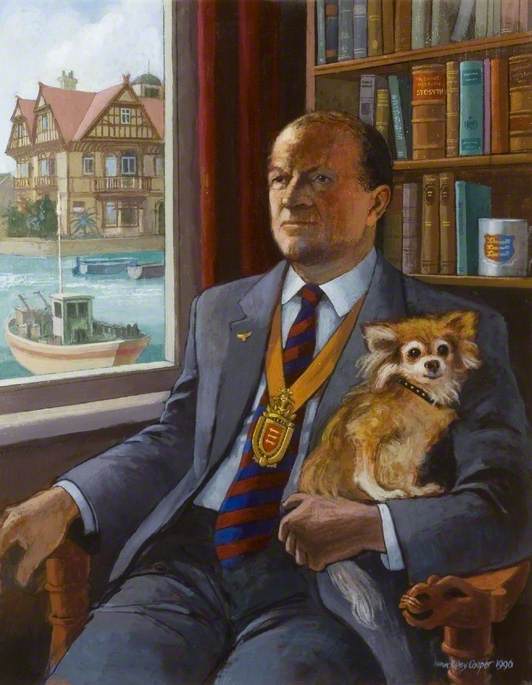 Tom was a convivial colleague and a committed Liberal who fulfilled a number of political and civic duties with dedication. He was particularly committed to the Club and in his later years he spent many weekdays in the Clubhouse even when Alzheimers had affected his memory.
Within the Liberal party Tom served for many years as an assistant to the party leader, Jeremy Thorpe. He occupied the role often designated as "bagman", which was much more important than its colloquial title implied, being responsible for the leader's transport, logistical arrangements, accommodation and security. Between 1959 and 1970 he was four times the unsuccessful Liberal candidate for Harwich. He was for a time the secretary and later Vice-President of the Liberal International (British Group).
He served as a Tendring District councillor, an Essex county councillor, and eventually took office as leader of the Liberal Democrat group and, in 1994, leader of the Essex County Council. He also served as the Mayor of Brightlingsea. In January 1996 he was appointed a Deputy Lieutenant of Essex. Janet Russell, a sometime member of the Club's staff played a caring role to Tom in his later years.
Thomas Edward Dale, 14 March 1931 - 11 November 2019.
Ralf Dahrendorf: an appreciation
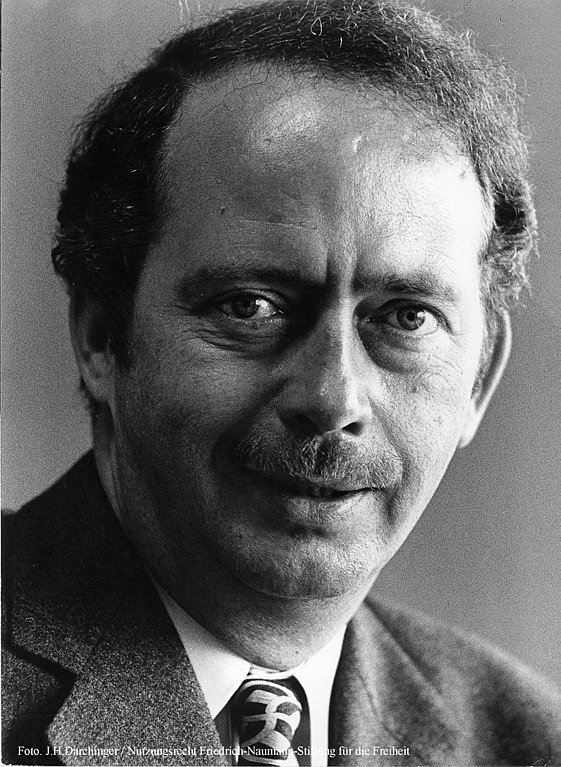 Liberalism was hugely fortunate in having such an articulate and original thinker and advocate as Ralf Dahrendorf. British Liberalism was unfortunate in that he was already forty-five years of age before he came to London in 1974 - as Director of the London School of Economics. One can only speculate as to the difference he might have made to Liberal Party politics here had his influence been significant twenty or even fifteen years earlier. As it was, his political career began in his native Germany in 1968 when the Free Democrat Party under Walter Scheel was a much more radical Liberal animal than its later incarnation under Graf von Lambsdorff.
Ralf's original discipline was sociology but, although sociology certainly continued to underpin and inform his writing, politics and applied political theory were his consistent forte. His background in sociology ensured that his political ideas had a secure foundation in rigorous analysis, and his ability to see clearly the flaws in opposing arguments, and particularly in "received" thinking, was often startling in that once he had pointed out what the Liberal position should be, it tended to be blindingly obvious. I doubt that I was alone in being jealous of Ralf's clarity of mind and intellectual self confidence.
Take, for instance, his description of the Greens in The Modern Social Conflict (1988) as "a party to end all parties," based on his view that “in most cases the Greens are merely the translation of a social movement into a political organisation. The social movement responds to one of the disparities in people's social position, the threats to the environment of life. Since these threats affect everybody, a "party" to represent them is a contradiction in terms. Given the Liberals' and Liberal Democrats' consistent espousal of sustainable economics from Mill onwards, why are we not shouting Dahrendorf's analysis of the Green party at every opportunity?
Following Ralf's appointment at the LSE at the end of 1973 the BBC invited him to give the 1974 Reith Lectures. Entitled The New Liberty - Survival and Justice in a Changing World, the six lectures set out for his audience of movers and shakers a thoroughly Liberal analysis and prescription, clothed in a flimsy non-partisan sheen for the sake of the BBC's reputation. Once again the party failed to appreciate the intellectual asset available to it at a crucial political moment.
One was always struck by Ralf Dahrendorf's remarkable prescience. The Reith lectures, and his even more focussed political follow up, Life Chances (1979), were the Liberal answer to Thatcherism even before its embodiment in government. His emphasis on the liberating power of the individual's ability to grasp personal opportunities, underpinned by an enabling state, provided Liberals, had they but seen it, with both the case against Thatcherism and the reason for distancing themselves from an outworn social democracy. By November 1980 Ralf was already convinced by what he saw of Thatcher to write: "the Conservatives are trying their hardest to turn back the pages of history and will finally be crushed by their weight, but not before they crush others. The experiment is an expensive one."
Given Ralf Dahrendorf's visceral opposition to conservatism, his intellectual critique of authoritarian socialism and his early social democratic background, one might have expected him to be sympathetic to the SDP. Far from it. His most well known quote is probably that the SDP was "promising a better yesterday." The direct quote is today elusive, and Ralf himself, whilst certainly not resiling from its sentiment, could not recall its first usage. It probably comes from a somewhat similar comment in his June 1982 New Statesman review of Susan Crosland's biography of Tony Crosland.
In fact, he was scathing about social democracy, and his Unservile State Paper of March 1980, After Social Democracy, is a brilliant analysis of the impending challenge that would shortly come from the SDP. I drew a great deal from it for my own booklet a year later, Social Democracy - Barrier or Bridge? Neither of us were heeded at the time and the SDP was accorded a deference that it did not deserve despite Ralf Dahrendorf's sharp comment that "the social democratic approach to the economic, social, cultural and political problems of the day has exhausted its strength. More than that, it has begun to produce as many problems as it solves ..... Social democracy in general has ceased to be a subject of political thought, it is almost as if all the imaginative minds had emigrated to opposition groups." His conclusion was typically prescient:
.... there are no signs at all that a centre party based on the present right wing of the Labour Party will be any more forward-looking than the ruling social democratic parties on the Continent. The issue today is not how to be social democratic, much as this may agitate the victims of adversary politics. The issue is what comes after social democracy. If this is not to be a Blue, Red or Green aberration, it will have to be an imaginative, unorthodox and distinctive liberalism which combines the common ground of social-democratic achievements with the new horizons of the future of liberty.
Later in 1980 he wrote that "Increasingly it has become evident that the social democratic consensus which has enveloped the politics of the industrial world in recent decades is in itself an oppressive force which gives rise to protests and new demands."
When one turns to Ralf Dahrendorf's writing on Liberalism generally and on other key subjects such as Europe or Equality, the problem is what to leave out. One is always struck by his sensitive use of language and his vivid analogies. (There ought perhaps be a law against foreigners writing and speaking such beautiful English!) Read for instance the whole of his superb essay on Freedom in The Dictionary of Liberal Thought, (2007) and take this passage from his Reith lectures:
Improvement is about quality. This begins with small things which are nevertheless not to be discounted, because they improve the quality of our lives. The recovery of cities for people is one example: precincts for pedestrians, underpasses for cars rather than for human beings, restored old buildings rather than slums. The way people live, the space and the comforts of their homes, provides many other examples. So do the arts, the opportunities for recreation and play, sports, and whatever contributes to beauty and to pleasure.
All this, I repeat, is important for an improving society, but improvement means more. It is more than a butterfly which adds a touch of colour to an otherwise drab and hopeless world, but goes to the core of this world, that is, the social construction of human lives.
Ralf was never frightened of tackling the dilemmas that have always beset Liberal thinkers. In 1988 he gave a remarkable speech to the Liberal International Congress in Pisa in which he addressed the issue of collective rights:
For the liberal, there are no collective rights, because all collectivities need representation, and all representatives are temptable by the arrogance of power, and thus liable to take away rights rather than give them protection. Rights are settlements of individuals, and more often than not they serve to protect persons against self-appointed or self-anointed "representatives" including those who claim to speak for whole peoples.
He went on to tackle issues of sustainability and liberalism:
The surprising and worrying discovery of the 1980s is that economic growth does not by itself solve all problems. It is, at least in practical terms, not even true to say that we must have growth first and then think about redistribution; most of those who argue this way never get to the second step. The decade of wild, often thoughtless, always greedy growth has in fact raised the issue of citizenship rights for all anew. The long term poor and persistently unemployed are disenfranchised in the sense that they are not a full part of economic life, have little say in political affairs, and live at the margin of society. Liberty is indivisible. Those who accept the exclusion of some have betrayed the principle and will end in a world of privilege and oligarchy.
For me an additional gain was Ralf Dahrendorf's wide reading which, when cited in his writings, encouraged me to delve further into the authors in question. Who but Ralf would have quoted Albert Camus on the key role of art in political change?
In 1988, at the time of the merger between the Liberal party and the SDP, Ralf told me that my analysis was correct and that he agreed with it, but that he believed that I was wrong not to join the new party. He believed that there was no alternative to the merged party. His contribution to the 1996 book Why I am a Liberal emphasised the same point: "If one is active in public life, one needs a party. Being a cross-bencher may be a commendable state of mind, but it is not an effective way of taking part in debate. The party which comes closest to my beliefs and intentions is that of the Liberal Democrats. Why? Because I am a Liberal as well as a liberal." It was the ultimate irony that he apparently never joined the Liberal Democrats and that in 2004 he resigned the Liberal Democrat Whip in the House of Lords to move to the cross-benches.
For the Liberal Democrats he had in 1996 chaired the Commission on Wealth Creation and Social Cohesion, which had a debate in the House of Lords but not much other exposure. The truth was that, although he tackled both, Ralf Dahrendorf was more a Liberal philosopher than a policy writer. A broad brush man rather than one for detailed points, his confidence in the relevance of Liberalism should be a lesson for all of us today. As he wrote to me: "It really is my view that the only chance of a political theory for the future which is not a re-writing of the past, is the Liberal chance."
Ralf Gustave Dahrendorf, Baron Dahrendorf of Clare Market in the City of Westminster,born 1st May 1929, died 17 June 2009.
Lord Gryff Evans
 Gryff Evans was one of a small band of loyal and highly competent Liberals who occupied key positions within the party organisation from the mid 1960s through the '70s and who ensured that the party maintained a national presence and an effective electoral machine within the permanent constraints of finance and the electoral system. His warm personality, good judgement and conviviality guaranteed his enduring popularity with the party's rank and file.
I first met Gryff in 1960 when I was Chair of the Merseyside Regional Young Liberals and he was successfully campaigning to become the national chair of the YLs. Thereafter we enjoyed working together on a series of party events, each almost invariably followed by a one or even two sociable drinks! Gryff had been the forerunner of Liberal Councillors in the area having succeeded in being elected to the Birkenhead County Borough Council for the Claughton ward; he later took the name of his ward as part of title when appointed a Liberal Life Peer. By 1961 he was one of a quartet of leading Liberal Councillors in the region who, with Peter Howell Williams in Wallasey, Alan Lycett in St Helens and Jack Coleman in Southport, plus Cyril Carr elected in Liverpool the following year, responded to Young Liberal invitations to address meetings.
Gryff was brought up in Welsh speaking home and both sides of his family supported the Liberal Party albeit at times divided between the Asquithian and Lloyd George factions. He followed the same political affiliation. For his high school education he was sent to the Friars' School in Bangor and it was there that he scored his first electoral success, standing as the Liberal candidate in the school's mock election to coincide with the general election of 1945. From 1965 Gryff chaired the party's National Executive Committee, a term of office that coincided with Jo Grimond's resignation as party leader. Jeremy Thorpe was the only Liberal MP to have been in the House of Commons more than three years and was regarded as Jo's obvious successor. Gryff was one of the small group of party managers at HQ who believed that Thorpe would be a disaster as leader - mainly for political reasons but also for aspects of his personality. Together with Pratap Chitnis, the party's Chief Executive, Tim Beaumont, the previous Chief Executive, and in a lesser role myself, Gryff endeavoured to canvass support for an alternative candidate via the consultations taken with local councillors and party officers, even promoting Richard Wainwright against his express wishes. The insuperable obstacle, however, was that the criticisms of Thorpe had been so successfully hidden by party officers that the membership were wholly unaware of them and were almost unanimously in favour of him succeeding to the leadership. And so the cabal failed.
The consequences of this failure eventually became clear. As before, the party's ability to conceal the constant problems with its leader from the public meant that when Thorpe's liaison with Norman Scott and the charges of the attempted murder of Scott - on which he was later acquitted - broke in the press it suddenly became a sensational cause célèbre. Thorpe had to be pressured into resigning the leadership and his successor, David Steel, extracted his promise not to attend the Southport Liberal Assembly in September 1978. He promptly broke that promise and effectively hijacked the whole conference. Gryff was the party president at the time, I was the chair of the Assembly Committee and Gryff's great colleague, Geoff Tordoff, was the Chair of the National Executive. A well-intentioned delegate from Hove, Dr James Walsh, wholly unaware of the long years of serious problems with Thorpe, tabled a motion of censure on the party's officers for "their treatment of the former leader." We three officers met and decided that it was time to give the full facts to the party members and would therefore tackle the motion head on and that, if it were carried, all three of us would resign on the spot! Gryff led the response to the motion and made a powerful speech whose frankness clearly staggered the delegates, so much so that the motion was withdrawn.
One particular aspect of Gryff's skills not often mentioned was his remarkable ability as the chairman of any meeting large or small. He had a intuitive skill of sensing when to be tough and to push decision through and when to allow delegates or committee members to let off steam. On the Assembly Committee we would regularly allocate the most difficult debate to him to chair. He invariably got through to the end unscathed and maintained the delegates' good humour. After one particularly long and tortuous session he came back to the Assembly Committee's room and flopped into chair, demanding "an octuple Scotch"!
He continued on Birkenhead County Borough Council and, following local government reorganisation in 1974, on the successor Wirral Borough Council and, later, on the Merseyide Metropolitan County Council, as Leader of the Liberal Group until 1981. Three years earlier, in May 1978 he was appointed as a Liberal Life Peer, as Baron Evans of Claughton. He also played a key role at party headquarters during the 1979 and 1983 general elections. His three parliamentary election contests in Birkenhead, twice, and Wallasey were sadly unsuccessful.
Gryff played significant roles in two other controversial internal party struggles. First, was the leadership's attempts to make the Young Liberals "respectable". It was the era of radical youth politics and the Young Liberal officers became known as the party's "Red Guard". Jeremy Thorpe and a number of other key officers objected to their tactics and in 1970 Thorpe set up a commission, under the chairmanship of the party's president-elect, Stephen Terrell QC, to look at the status of the Young Liberal within the party. Gryff was appointed as a member of the commission which eventually produced some fairly anodyne proposals. Even so it made a number of criticisms of the Young Liberal tactics and Gryff wrote what he called "a note of warning" arguing that whereas the Young Liberals' public attacks on the party leadership could not be condoned, "the open contempt for the views of the mass of the party by some MPs, particularly the Chief Whip of the time, inevitably contributed to the stridency of the YLs who realized the only way to be heard was to shout loudly and rudely."
The other key role Gryff played was during the Lib-Lab pact of 1977-78. It was a fraught period of some fifteen months with inevitable - and legitimate - tensions between the parliamentary leadership and the party members. A special assembly was called in January 1978 at which the arguments for and against continuing the pact were debated and an acceptable compromise agreed. Gryff chaired the whole day and coped brilliantly with the difficult procedural proposals and counter-proposals. Whatever his personal views on individuals and issues, he acted with great loyalty to the party throughout many difficult years. I doubt that he had a single enemy within the Liberal Party.
Gryff's personal stature and the respect for his abilities led to a number of civic and voluntary sector appointments. He was held in great respect within the wider community as well as in the political sphere.
David Thomas Gruffydd Evans, Baron Evans of Claughton, 9 February 1928 - 22 March 1992
Lord Ezra
Recently, researching in the membership lists in order to answer a query, I reached the year 1938. Off the page jumped the name "Derek Ezra"! He had indeed first joined the Club some seventy-five years ago, before he was called up into the war in which he served in intelligence. In post-war years Derek Ezra was an archetypal public servant of the period, dedicated to working with others of like commitment to deliver a key service, in his case coal. More recently he was a very distinguished Club member.
He joined the National Coal Board on the industry's nationalisation in 1947 and rose through the ranks, becoming its Chairman from 1971 to his retirement in 1982. He believed firmly in the potential of coal and of its role in Britain's energy requirements and in the economy generally. He developed a close - too close according to Margaret Thatcher - relationship with the miners' union leader, Joe Gormley, and between them they persuaded successive governments to increase miners' wages substantially and thus to prevent damaging strikes. The quid pro quo was to be an improved productivity but this was never achieved to any significant effect; they did, however, agree on closing a substantial number of uneconomic pits and manpower was reduced by two-thirds over the thirty-five years of Ezra's time with the NCB. Between them, he and Gormley kept the left-wing of the union at bay and it is often said that, had he been the Board's chairman during the time of Arthur Scargill's leadership the devastating strike of 1984-85 would not have happened, though his Conservative critics argue that this would have been achieved by Ezra buying the unions off. His urbane and conscientious style, and his obvious dedication to the coal industry, stifled a great deal of criticism later on from those in government who would otherwise have pushed for his dismissal.
He had joined the Liberal party before the war and had been spotted as an able Young Liberal by party leader, Archie Sinclair. During Ezra's time with the NCB he was unable to show his political affiliation, though both his Jewish background and his co-operative style of management were indicative of his liberal personality. He was made a life peer on his retirement from the NCB and, soon after, he settled very comfortably on to the Liberal and, later, Liberal Democrat benches. He was a regular contributor to Lords debates with a final question tabled in October 2014. Sadly he felt unable to accept the Club officers' invitation to a dinner to celebrate seventy-five years since he was first a member. Lord Ezra has left a number of Liberal books, pamphlets and leaflets to the Club. Many of these fill gaps in the Club's library and will be valuable additions to the collection.
During and after his public career he received many awards and served on a number of boards. He was a ver active peer, including working with Lord Jim Callaghan on numerous amendments to the rail privatisation bill in an attempt to stall it. His wife, Julia, died in 2011 after more than sixty years of marriage.
Lord Ezra, 1919-2015.
Penny Ewens
 Joan "Penny" Ewens, Honorary Alderman and former Leeds City Councillor, has died at the age of 94. Her maiden name was Penwill which gave rise to the name Penny at her Liverpool school to differentiate her from five other Joans in the same class. She served in the Intelligence Corps during the war and met her future husband, David Ewens, on VE day in London. They were married soon afterwards. David's job brought them to Leeds in 1960 and, as a mature student, she enrolled at the James Graham Teacher Training College. After a spell at the Kitson College she settled into a long career at West Park High School where she took a particular interest in careers and in drama.
Always an activist she was involved in a number of campaigning organisations including "Families need fathers". Even after she and David separated she maintained a cottage in North Wales from where took her children sailing. Later, after the children had moved on, she would "borrow" other friends' children in order to carry on sailing. Having spent one holiday driving across Europe she then collected her son who was an aid worker in Botswana and they drove around the Okavango delta. This sparked a lifelong interest in Africa and she returned there whenever possible.
Typically, once having got involved with the Liberal party in the 1980s, Penny soon became a Leeds City Council candidate. She contested the Weetwood ward at eight consecutive elections finally coming within 114 votes of victory. Feeling that she had gone as far as she could, and having reached the age of 70, she felt that a new face was needed and "retired." Inevitably, inactivity did not suit her and in 2003, after a seven year gap, and at the age of 77, she took on a new challenge fighting a Labour held ward in the inner city. The following year she gained the Hyde and Woodhouse seat, taking two Liberal Democrat colleagues on with her. She served two four year terms only retiring in 2012 at the age of 85. Whilst a councillor she was involved with a number of local organisations including, the Cardigan Centre, Swarthmore Education Centre and the Little London Community Association. She was made an Honorary Alderman of the city in 2017. She died on 5th December 2020.
She leaves a daughter, Victoria, a son, Max, and a number of grandchildren and great grand children.
Recently added...
-
Menzies (Ming) Campbell
23 December 2025
 by Michael Meadowcroft Before politics Ming Campbell had successful...
 -
23 December 2025
Annette Brooke -
23 December 2025
Joiners and Leavers -
25 October 2023
Cause and Effect - the background to Hamas terrorism
